Rakuten Fit
Making Fitness Economically Productive
Designing a fitness companion app that transforms physical activity into economic value — connecting a white-label wearable to the Rakuten Economic Zone's 111 million members, where steps become Rakuten Points and health data informs life insurance premiums.
111M
Rakuten ecosystem members
40+
High-fidelity screens designed
6
Research-validated personas
4-Tier
Gamification framework
Context
111 Million Members Without a Fitness Ecosystem
Rakuten operates Japan's largest internet services ecosystem — 70+ businesses, 111.4 million members, 76.7% using two or more services. Rakuten Points function as near-currency used by 59.3% of Japan's consumers. Yet Rakuten had no branded fitness product — even as the Japanese fitness app market was projected to grow to $5.3 billion by 2035.
The strategic gap: every competitor — Apple, Google, Samsung — treated fitness as standalone. None could connect physical activity to a massive e-commerce rewards ecosystem. In November 2023, Rakuten Life Insurance launched "Well Smile" — the first medical insurance in Japan to refund premiums as Rakuten Points based on health.
Every fitness app asks: how do we get users to exercise? Rakuten Fit asks: how do we make exercise economically productive?
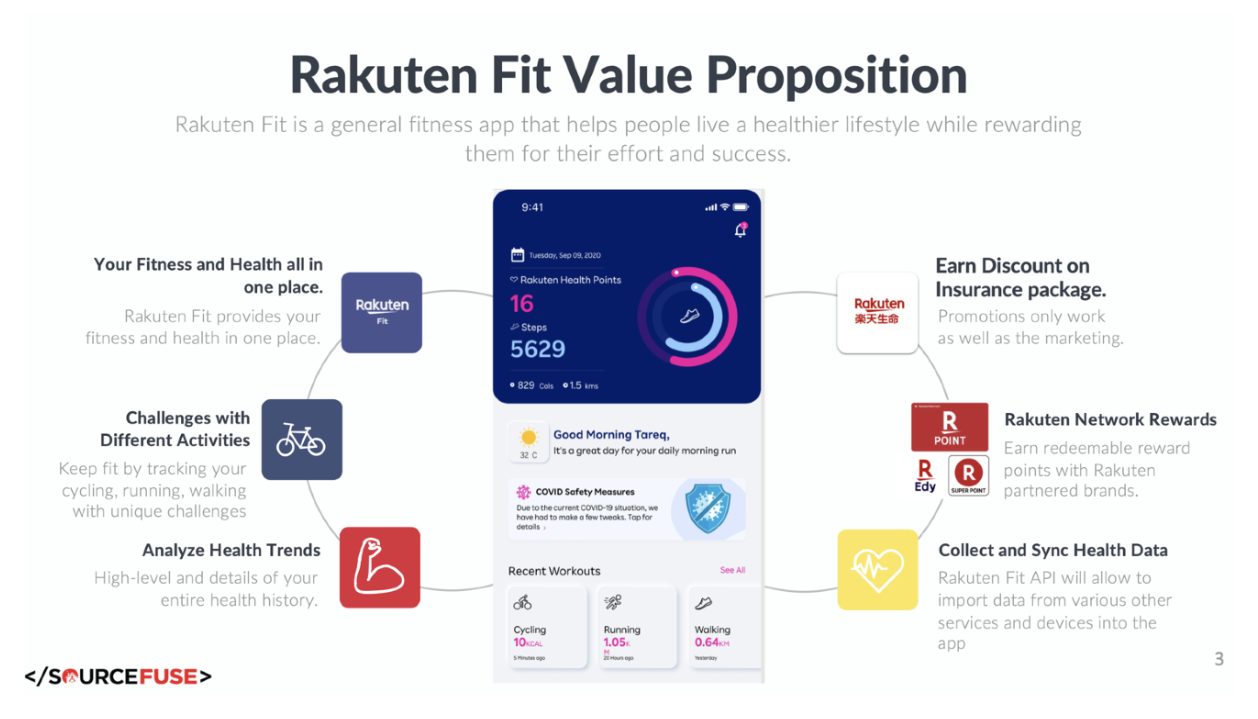 Rakuten Fit · Value Proposition
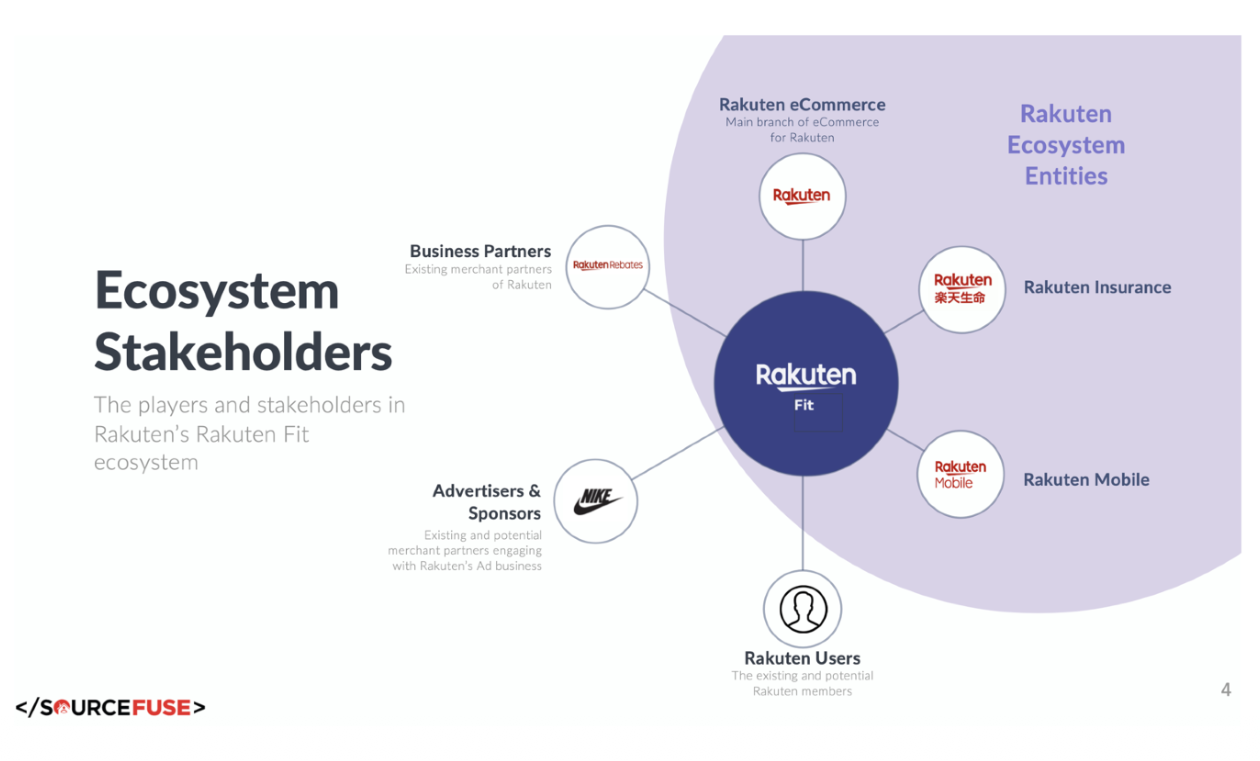 Ecosystem Stakeholders
Key constraints: white-label hardware with limited sensors, complex points economy across 70+ services, multi-stakeholder alignment (Mobile, Insurance, e-commerce), Japanese market specificity.
The Work
Steps as Currency
Deep competitive teardown of 6 platforms mapping onboarding, daily engagement, gamification, rewards, data visualization, ecosystem connections. Japanese fitness market analysis — aging population, privacy sensitivity, femtech boom.
6 personas: Health-Conscious Points Optimizer, Casual Walker, Dedicated Runner, Insurance-Motivated, Social Competitor, Corporate Wellness Participant.
4-tier gamification system: Starter (1x points), Active (1.5x), Challenger (2x), Champion (3x + exclusive rewards). Core engagement loop: Activity → Achievement → Points → Spending → Motivation → Activity.
40+ high-fidelity screens: Onboarding (6), Daily Dashboard (8), Challenges & Gamification (10), Health Insights (8), Ecosystem Integration (6), Settings (4).
Nike co-branded experience proposal — seasonal challenges earning both Rakuten Points and exclusive Nike product access.
Insurance data architecture: opt-in only, visible benefit, data transparency, user control, positive framing. "Your activity this month earned you ¥X in premium refund."
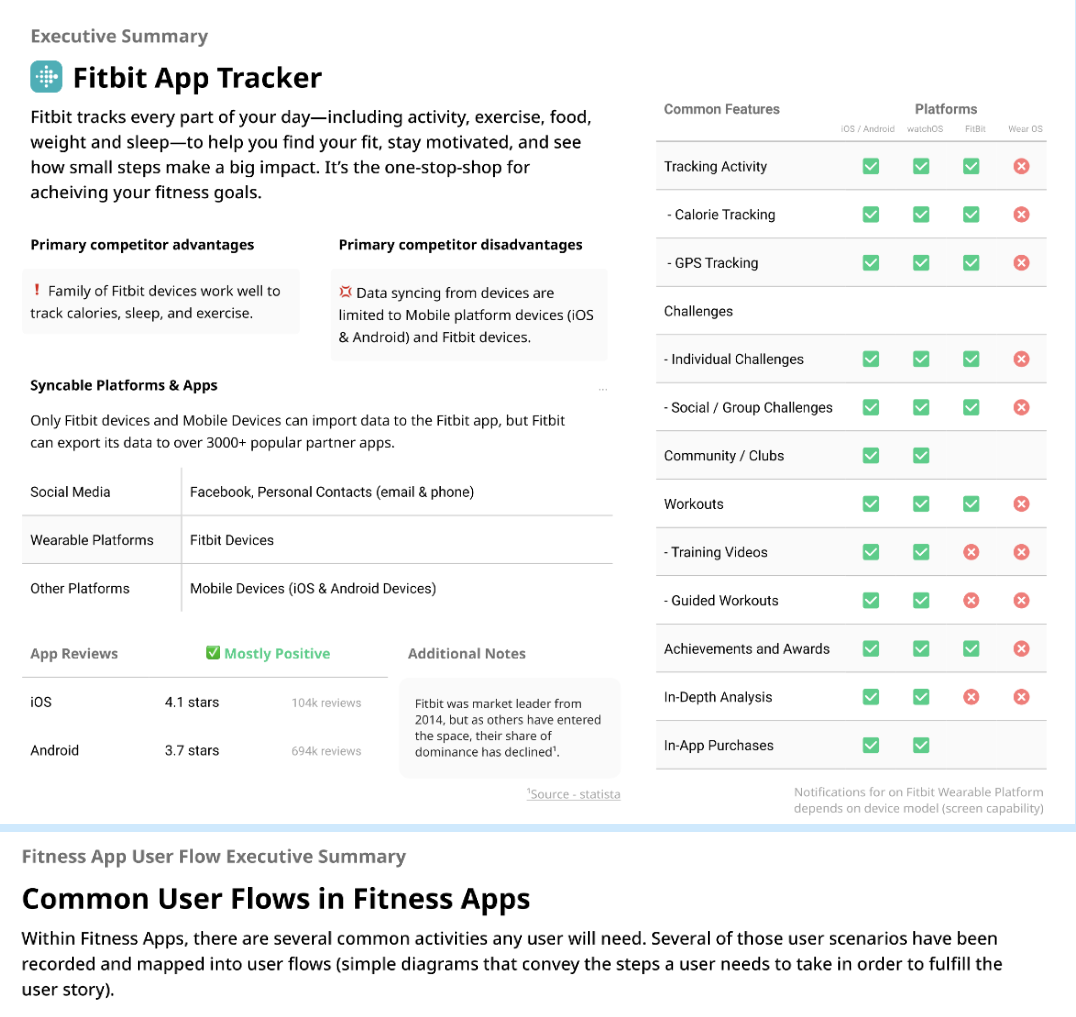 Fitbit App Tracker · Competitive Analysis
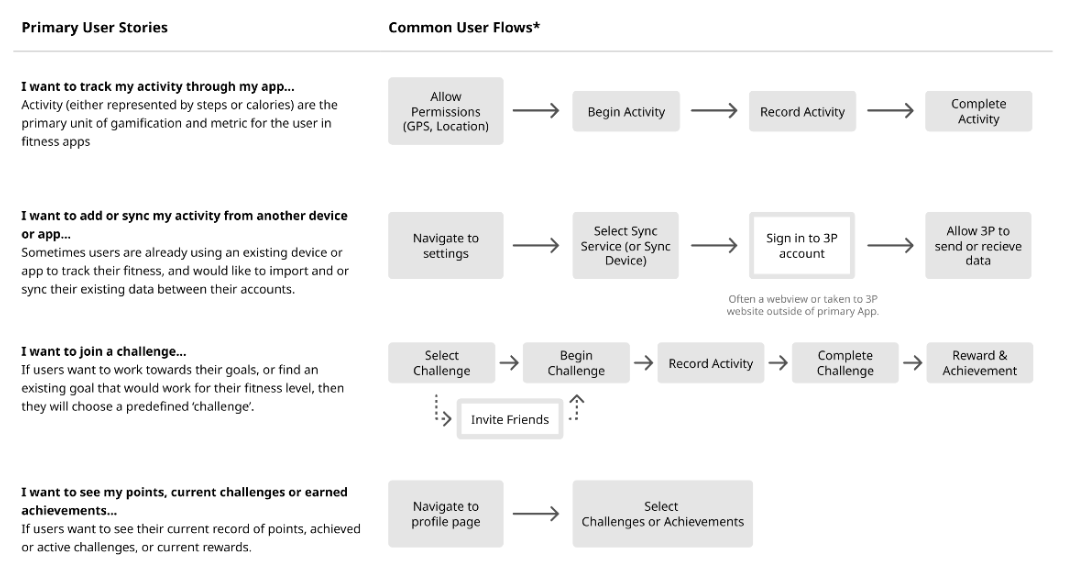 Common User Flows · Fitness Apps
Impact
Fitness as Economic Infrastructure
40+ high-fidelity screens, 6 personas, 4-tier gamification framework. First-of-its-kind design connecting wearable health data to e-commerce points, life insurance premiums, and brand partnerships. Nike co-brand proposal. Privacy-first health data sharing design. Built to MVP/prototype stage with user testing. Validated core hypothesis: Rakuten Points as fitness reward is stronger than badges, streaks, or social metrics.
Before
Fitness apps compete on tracking accuracy, social features, coaching
After
Rakuten Fit competes on economic outcomes — steps become currency
Before
Health data sharing = surveillance anxiety
After
Opt-in, visible benefit, user-controlled data → trust
Reflection
Competing on Outcomes, Not Features
When hardware is a constraint, software and ecosystem create the moat. No Apple Watch can earn Rakuten Points. Ecosystem thinking — this isn't standalone, it's a node in 70+ services. Gamification as behavioral architecture — tangible economic rewards bridge intention and action. Privacy-first data design — health data to insurance is a trust problem of the highest order.
People abandon fitness apps because the rewards are abstract. Rakuten Fit makes exercise economically productive — your morning walk earns money you can spend this afternoon.
The design system I established demonstrates three capabilities: ecosystem-integrated incentive design, white-label hardware opportunity as competitive advantage through software, and health data architecture that builds trust through transparency and user control.
Recognition
- 40+ Screen Design System
- 6 User Personas
- Nike Co-Brand Proposal
- MVP Validated
Agency Context
Enterprise AWS Projects · SourceFuse × Rakuten
Rakuten Fit was developed in partnership with SourceFuse Technologies, an AWS Premier Partner. Alongside the fitness app, SourceFuse delivered a suite of enterprise-grade modules for Rakuten Mobile — including a Vendor Manager platform covering contracts, performance, SLAs, and risk management across Rakuten's telecom operations.
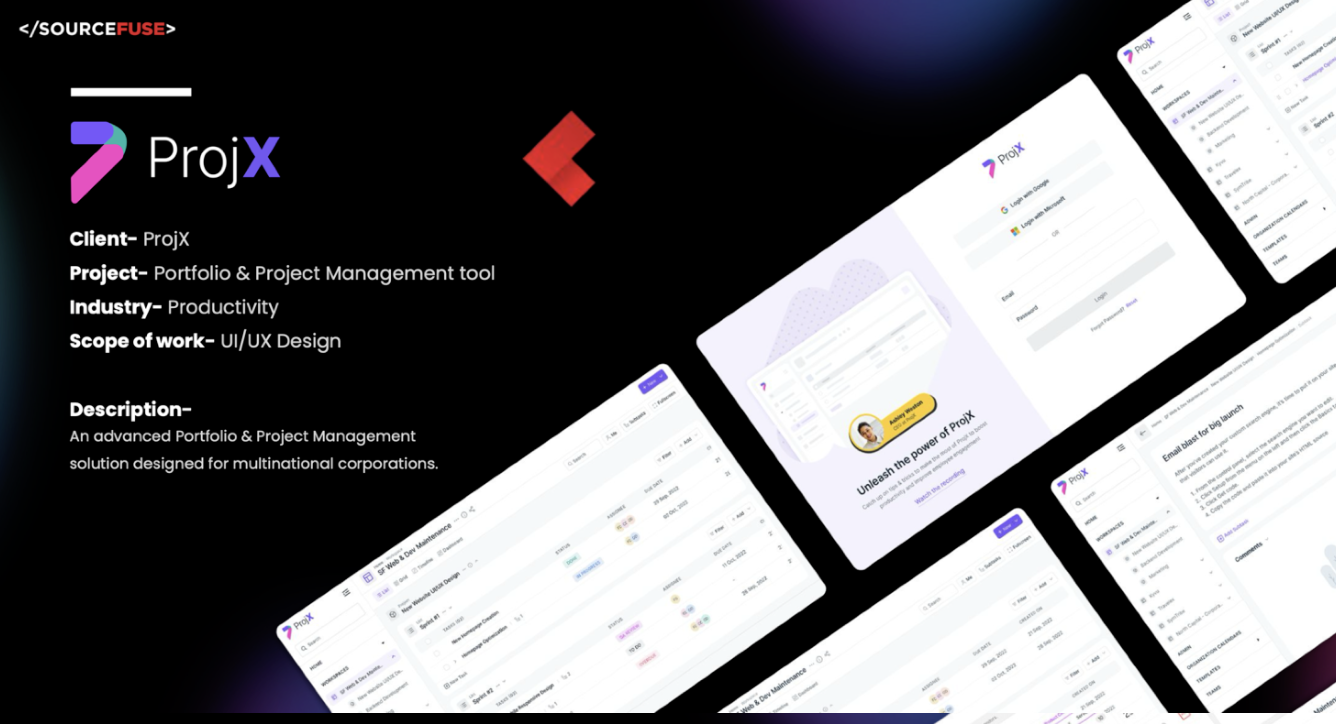 ProjX · Portfolio & Project Management
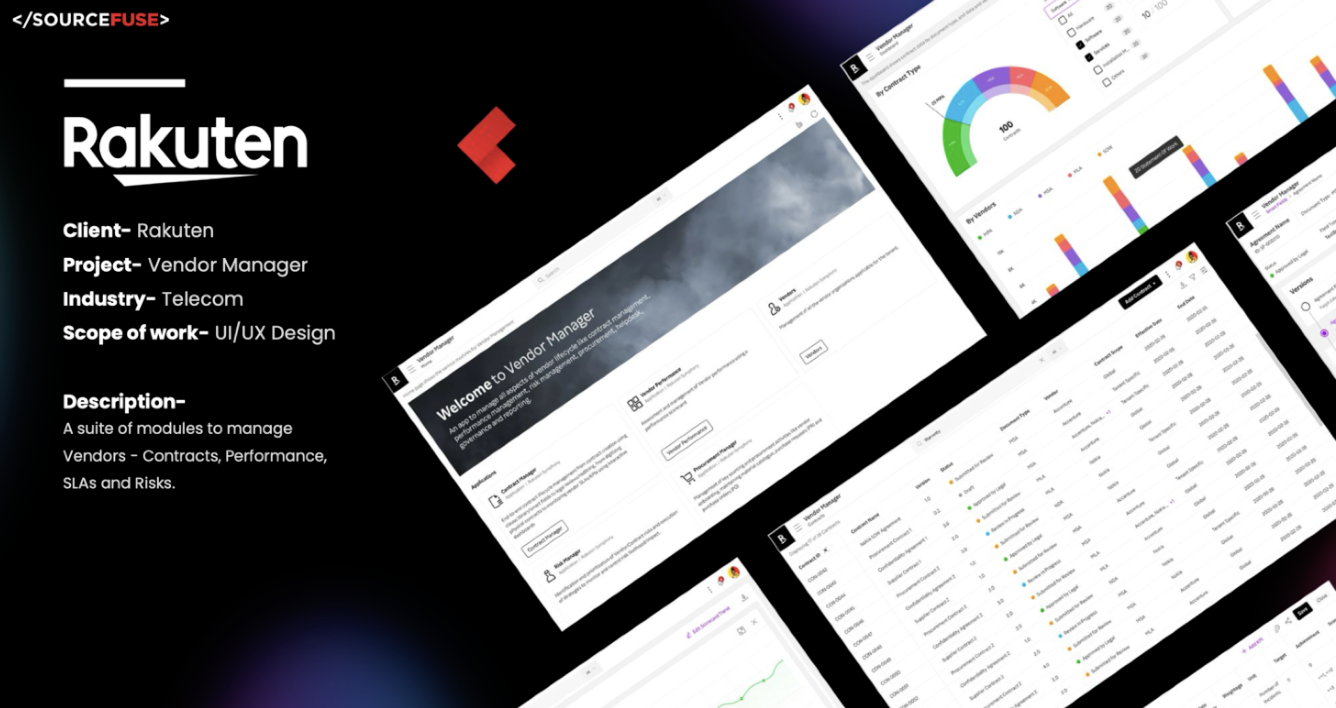 Rakuten · Vendor Manager Platform