Miselu C.24
OS-Level Audio Engineering
A Bluetooth LE MIDI keyboard controller with a USPTO patent — reducing Android audio latency from 250ms to under 10ms and making real-time musical performance possible on Android for the first time.
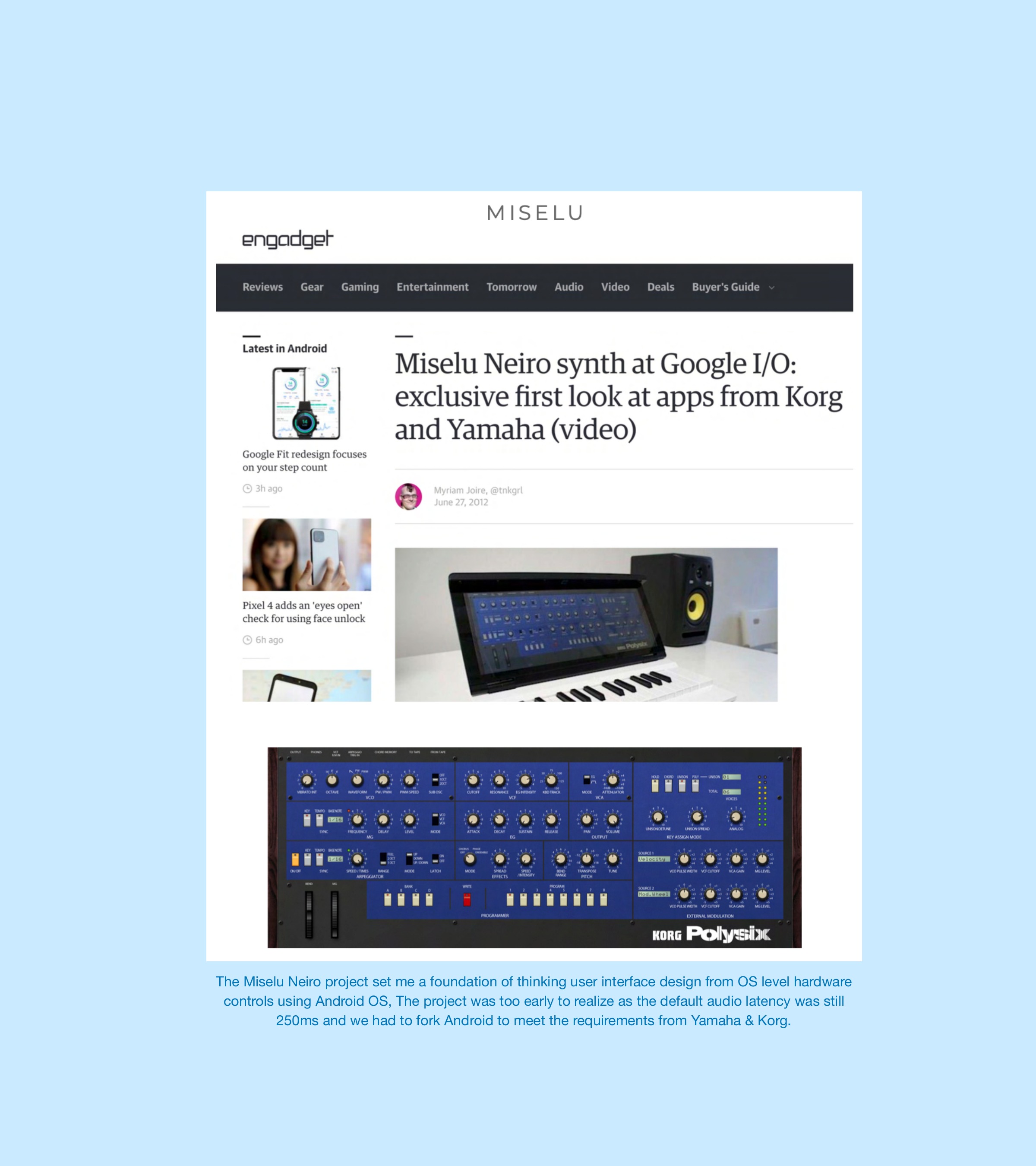 Miselu C.24 · iPad MIDI Keyboard · Hardware Invention
<10ms
Android audio latency — down from 250ms
1
USPTO Patent — US9165476B2
2012
Google I/O demonstration
Context
The Latency Wall
In 2012, Android controlled a growing share of the global smartphone market — but it was categorically unusable for musical performance. The stock Android audio stack carried approximately 250ms of latency between input and output: a quarter-second delay that made real-time performance impossible. For context, 10ms is already perceptible to trained musicians. At 250ms, a pianist pressing a key and hearing the resulting note are two separate events. The instrument becomes unplayable.
Miselu was building the C.24 — a portable Bluetooth LE MIDI keyboard designed to turn smartphones and tablets into musical instruments. The hardware was elegant. The software problem was existential: without solving Android latency, the product had no market.
The Work
Forking the Audio Pipeline
As Director of Software Products, I designed and built the software ecosystem that made the hardware perform. The solution required bypassing Android's high-level audio framework entirely and communicating directly with the hardware audio layer — a fork of the Android audio pipeline that had never been done for a consumer MIDI product.
This required deep OS-level engineering: understanding the Linux kernel's audio subsystem, the Android HAL (Hardware Abstraction Layer), the timing characteristics of specific audio chipsets, and the Bluetooth LE protocol stack well enough to drive MIDI data with sub-10ms round-trip timing. The work lived at the intersection of hardware, firmware, and operating system — not at the application layer where most software products exist.
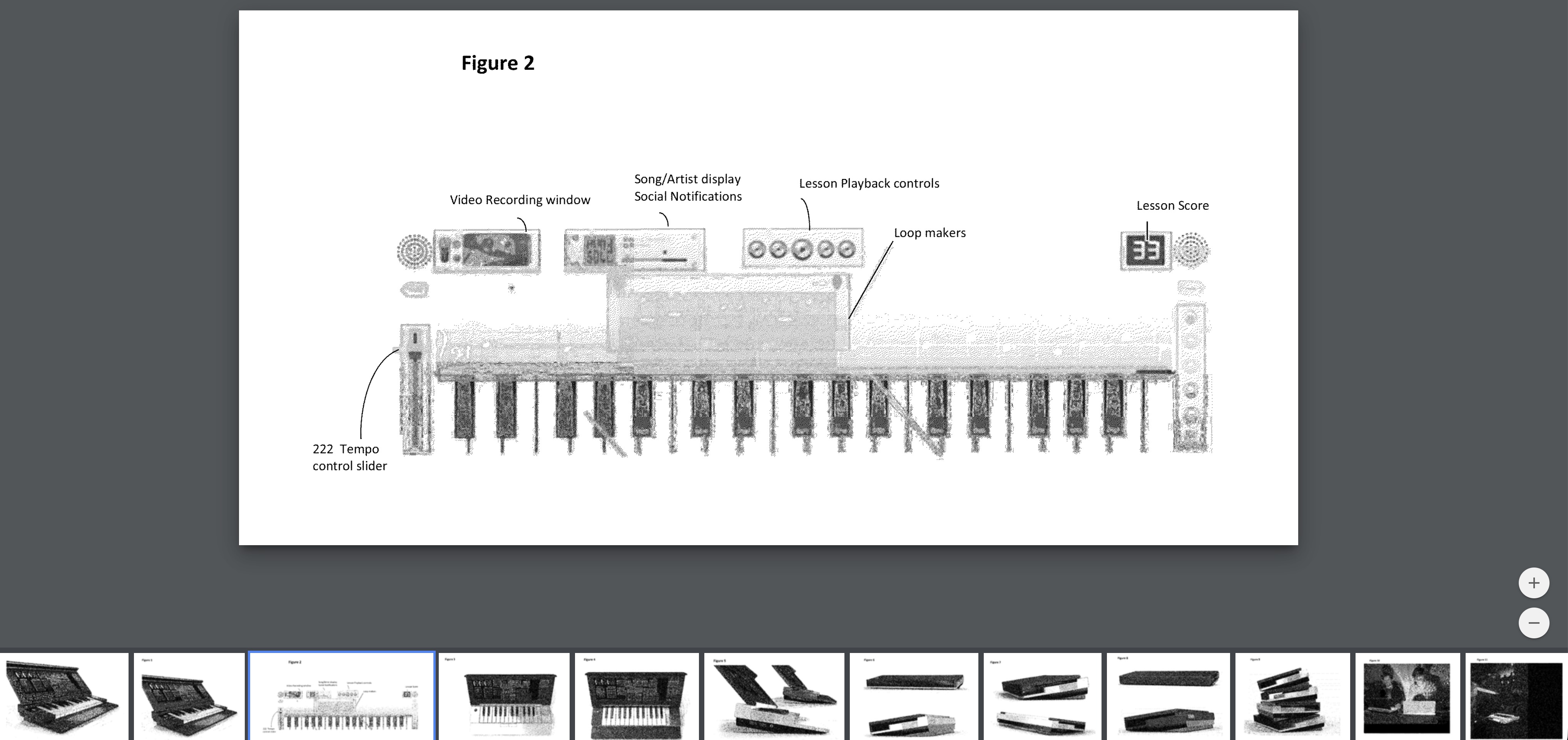 Miselu C.24 · Patent Figure 2 · US9165476B2
The C.24 and the companion Neiro music creation app were demonstrated at Google I/O 2012 — the annual developer conference where Google introduces new platform capabilities to thousands of engineers. Demoing an audio latency breakthrough to developers and hardware partners at that scale was both a technical validation and a market signal: Android could host professional musical instruments.
I also established partnerships with KORG and Yamaha — two of the most respected names in professional musical instruments — who recognized the technology's validity and opened distribution pathways into the professional music market that a hardware startup could not have reached independently.
Impact
First Viable Real-Time MIDI on Android
The result was sub-10ms Android audio latency — a 96% reduction from the 250ms baseline — making the C.24 the first viable real-time MIDI controller for the Android platform. A platform-level constraint that the entire industry had accepted as a given was removed through OS-level intervention.
I am a named inventor on US Patent 9,165,476 (US9165476B2), covering the wireless MIDI controller technology that enabled low-latency musical instrument communication over Bluetooth Low Energy. The patent recognizes the specific technical approach — not just the product category — as a genuine invention.
A USPTO patent, a Google I/O demo, and partnerships with KORG and Yamaha — from a startup that dared to fork Android's audio pipeline to make music happen in real time.
Reflection
Platform Constraints as Design Problems
Miselu taught me that the most important design problems are often platform problems — constraints so foundational that everyone in the industry treats them as fixed. Audio latency on Android wasn't a Miselu problem. It was an Android problem. The entire mobile music ecosystem had simply decided to not build for Android because of it. Treating that constraint as solvable rather than given was the prerequisite for everything else.
The other lesson was about the relationship between software depth and product quality. Most product roles operate at the application layer — building on top of platforms rather than inside them. Working at the OS level gave me a model for how systems actually perform: timing, hardware abstraction, driver constraints. That understanding shows up in every subsequent project where performance is a design material, from the real-time audio-reactive systems at Robot Heart to the frame-rate discipline at Denon/Marantz.
Recognition
- USPTO Patent US9165476B2
- Google I/O 2012 — Platform Demo
- KORG Partnership
- Yamaha Partnership
- TechCrunch Disrupt SF 2013