Toyohara Kunichika Digital Archive · Kyoto University of the Arts
Bringing 1,000 Lost Prints Back to Life
Under the mentorship of Professor Mitsuhiro Takemura — one of Japan's pioneering media aesthetics scholars — I helped build the digital infrastructure of his media lab at Kyoto University of the Arts. The lab's partnership with the Marshall McLuhan program shaped how I see media and technology: as extensions of human capability. The Kunichika digital archive was the first time I put that philosophy into practice.
記 · 伝 · 色
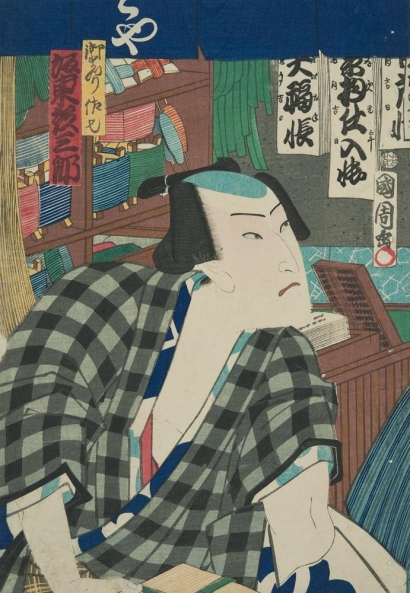 Kunichika Archive · 4K Display · National Museum of Kyoto
The Mentor
I met Professor Mitsuhiro Takemura at Nihon University, where he taught Media Studies. I was a film school student who spent more time with Macintosh, audiovisual production, new media, and the early internet than with traditional coursework. Takemura-sensei was already one of Japan's most visible media aesthetics scholars — featured in WIRED Japan and a jury member at Ars Electronica.
I became his 鞄持ち — the student closest to the professor. You carry the bag, you sit in every meeting, you hear every conversation. It is a position of trust.
The Media Lab
When Takemura-sensei founded his media lab at Kyoto University of the Arts, I followed as his associate researcher. The lab partnered with the Marshall McLuhan program — and McLuhan's thinking became the lens through which I learned to see technology. Media as extensions of human capability. The medium shapes the message.
My first task was building the lab's infrastructure from nothing. The UNIX server had no OS disc. But it had a network connection. I downloaded the operating system over the internet, set up DNS, mail, FTP, and the web server by hand, learning from online documentation alone. Two months. That experience gave me a foundational understanding of how the internet and operating systems actually work — from building one that had to serve a real research lab.
The lab's broader mission was what Takemura-sensei called "Digital Japanesque" — digitizing Japan's traditional cultural assets with the fidelity and care they deserved. The Kunichika project was born inside this environment.
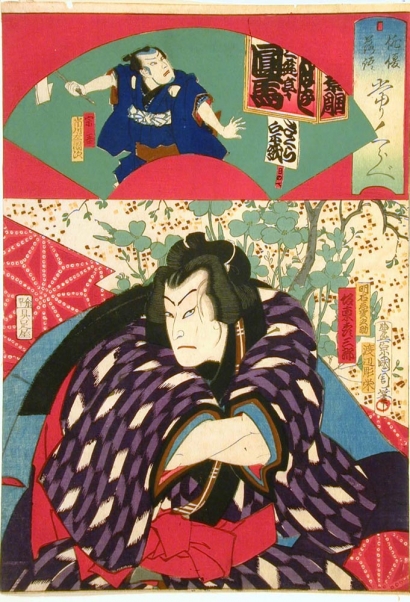
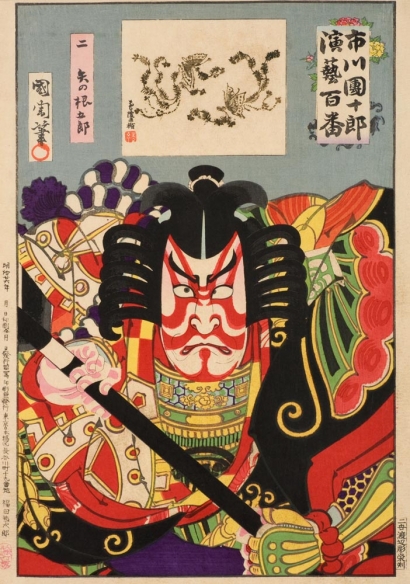 Yakusha-e · Toyohara Kunichika · Ohe Naokichi Collection
The Collection
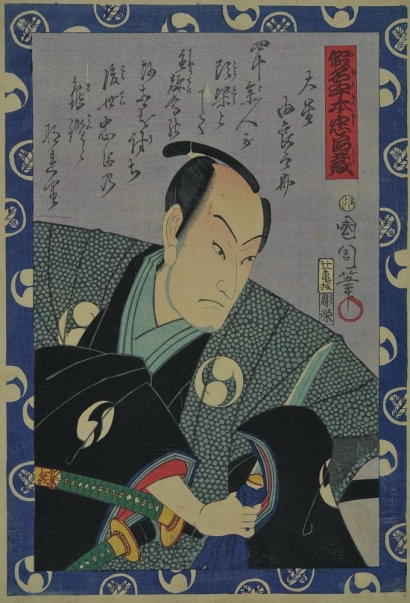
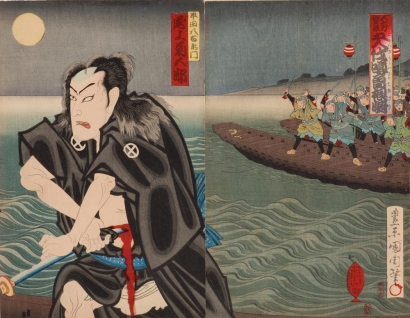
Toyohara Kunichika (豊原国周, 1835–1900) is one of the Three Greats of Meiji Ukiyo-e — celebrated as the "Meiji Sharaku" for his unrivalled yakusha-e: woodblock portraits of Kabuki actors. He produced over 13,000 prints in his lifetime, yet the most concentrated collection — more than 1,000 prints donated by Ohe Naokichi, the second president of Kyoto University of the Arts — had no public-facing presence. It lived in academic storage.
Ohe donated the collection in nine phases beginning in 1983, with one condition: that it be used for education and research. The digital archive was the answer to that condition.
The Exhibition
The archive was selected for showcase at the National Museum of Kyoto as part of a government cultural heritage digitization program. The 4K display installation presented prints at near-original scale, allowing visitors to read the carver's name, the publisher's address, and the print number in Kunichika's own hand — details invisible in standard reproduction. What had been a scholar's archive became a public experience.
This is where my design philosophy was formed. McLuhan's extensions of man, Takemura-sensei's media aesthetics, building infrastructure from scratch, making centuries-old cultural systems accessible without losing their depth — it all came together here.
References
Mitsuhiro Takemura — Media Aesthetics Research Center, Kyoto University of the Arts
Marshall McLuhan Program — University of Toronto
『記憶のゆくたて―デジタル・アーカイヴの文化経済』— Tokyo University Press · Telecom Social Science Award
『Outlying 僻遠の文化史』— rn press, 2024 · Takemura's autobiography
1,000+
Kunichika prints in the Ohe Naokichi Collection
4K
Resolution display — near original print scale
国立
Showcased at National Museum of Kyoto